Why a Moonbase Needs a Map Before It Needs a Building
Site selection drives habitat design, power, thermal control and landing safety at the lunar south pole.
Why lunar site selection comes first
NASA's Artemis Base Camp concept, first detailed in 2020, includes a habitable mobility platform, a foundation surface habitat, a human landing system and surface fission power. The list sounds like hardware. It is really a set of answers to a single question: where on the Moon can humans live and work for long periods?
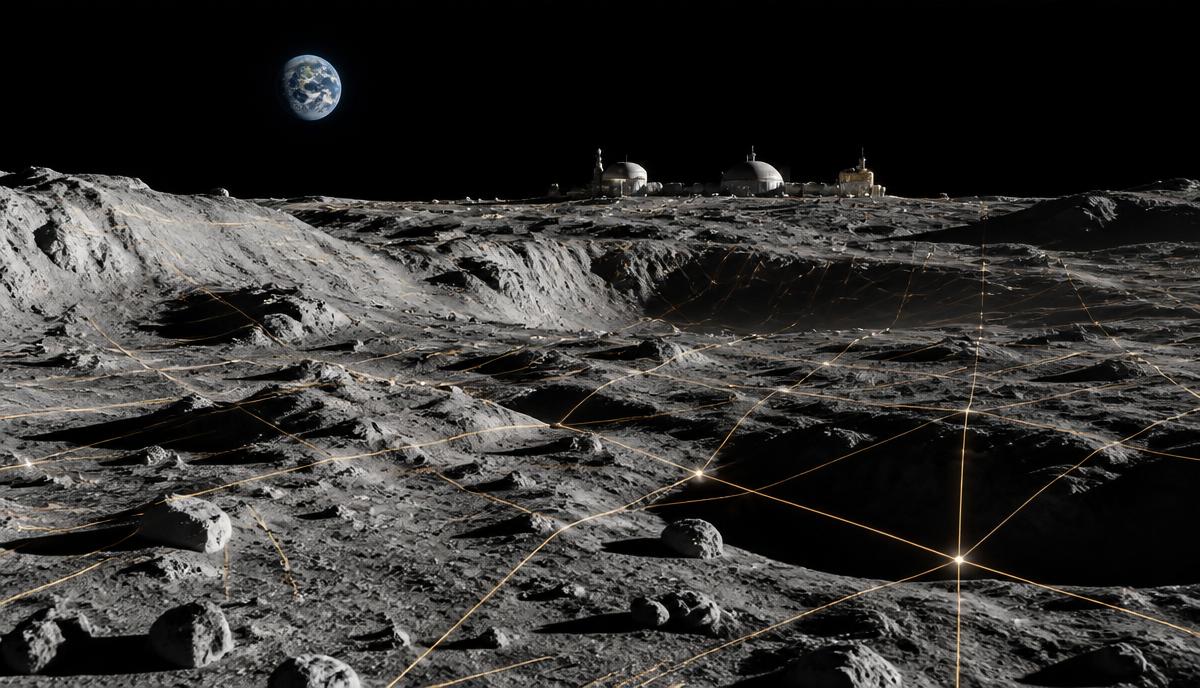
That question cannot be answered from orbit averages. A permanent lunar base needs local terrain, local illumination, local temperature and local access to resources. Those four inputs decide the shape of the habitat, the size of the power plant, the routing of roads and the design of the lander. Site selection is therefore not a late decision. It is the first engineering decision.
Candidate landing regions at the south pole
On 19 August 2022, NASA announced 13 candidate landing regions near the south pole for Artemis III. Each region measured roughly 15 by 15 kilometres. On 28 October 2024, the agency down-selected to nine candidate regions, citing surface conditions and compatibility with the SpaceX Starship human landing system. The shortlist is still large because the data is still coarse.
What recent lunar landings demonstrate
The recent commercial landings show why coarse data is dangerous. Intuitive Machines' IM-2 Athena touched down on 6 March 2025 near Mons Mouton, the southernmost landing attempted by a US spacecraft. It ended up inside a crater, on its side, roughly 820 feet from the intended target. Solar panels were shaded. The mission ended the next day when batteries died. Firefly's Blue Ghost Mission 1, by contrast, landed upright in Mare Crisium on 2 March 2025 and operated for a full lunar day. The difference was not ambition. It was terrain.
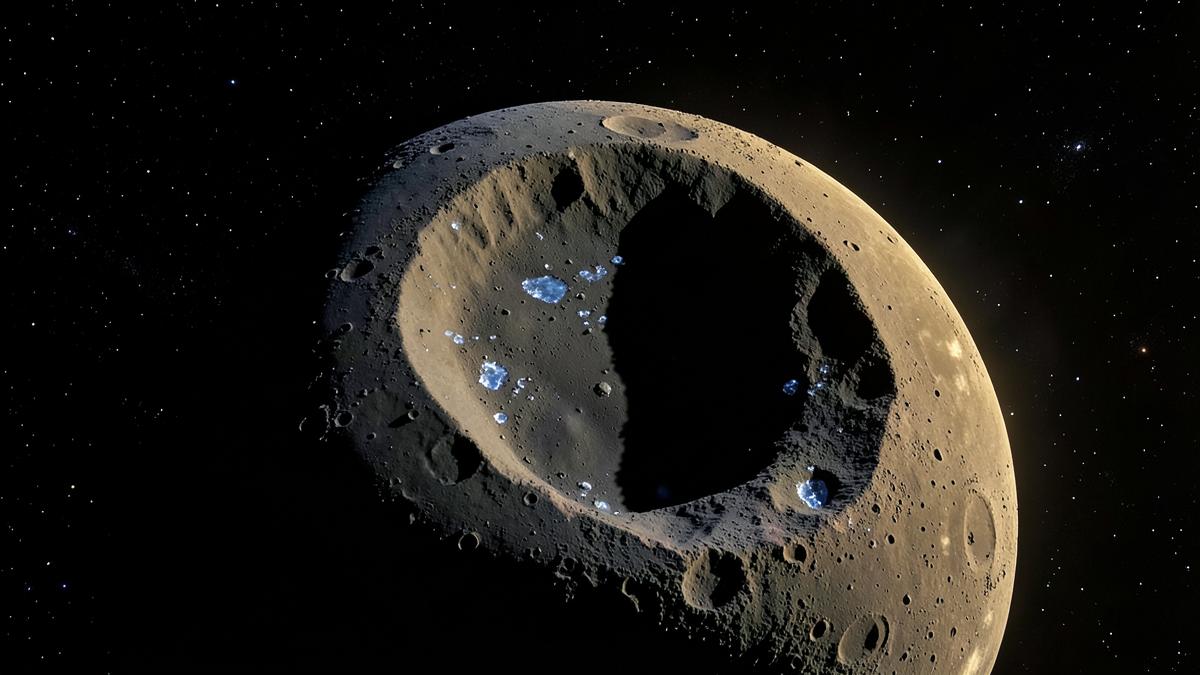
The south pole is harder than Mare Crisium. Sun angles stay low, casting long shadows that move with the season. Slopes are steep inside small craters. Some areas receive near-continuous illumination on elevated ridges, while adjacent floors sit in permanent darkness. Connecting Ridge, identified in a 2014 DLR study using LOLA terrain models, is one of the better-understood near-continuous illumination sites. Nearby PSR floors may hold ice. The ideal base sits at the boundary between those two environments.
Power and thermal constraints
Power compounds the geometry. A solar array on a ridge with long illumination periods avoids the 14-day lunar night, but it still needs mass, pointing and dust tolerance. NASA's Fission Surface Power project, initiated with three design study awards in June 2022, targets 40 kilowatts electric output, a 6,000-kilogram mass budget and a 10-year operational life. It would be sun-independent. It would also be heavy and complex. Whether a base needs it depends on where the base is and what it does.
Thermal design follows from the same data. The ChaSTE instrument on India's Chandrayaan-3 lander, which touched down on 23 August 2023, measured higher surface temperatures near the south polar region than pre-mission global models predicted. That matters for radiator sizing, habitat insulation and any system that must survive contact with the surface.
ESA's Argonaut programme approaches the problem from the cargo side. Europe's lunar lander, with a first flight targeted for the 2030s, is designed to deliver up to 1,500 kilograms to the surface on Ariane 6. Thales Alenia Space leads the industrial consortium selected in January 2025. Argonaut needs landing sites just as much as Artemis does. A cargo lander with no safe, well-characterised target is an expensive crater.
A map is not a decoration for a proposal. It is the input that makes every other engineering choice possible.
This is the logic behind SpaceOro's lunar mission EU work. Before we talk about habitats, rovers or propellant plants, we need the survey data that tells us where those things can go. The previous article covered where the water actually is at the lunar south pole. The next explains how European space startups and ESA programmes are turning that science into flight hardware.