ISRU Explained: Turning Lunar Ice Into Fuel, Air and Water
How in situ resource utilisation works on the Moon, what it takes to split water into propellant, and what still has to be proven.
What lunar ISRU means
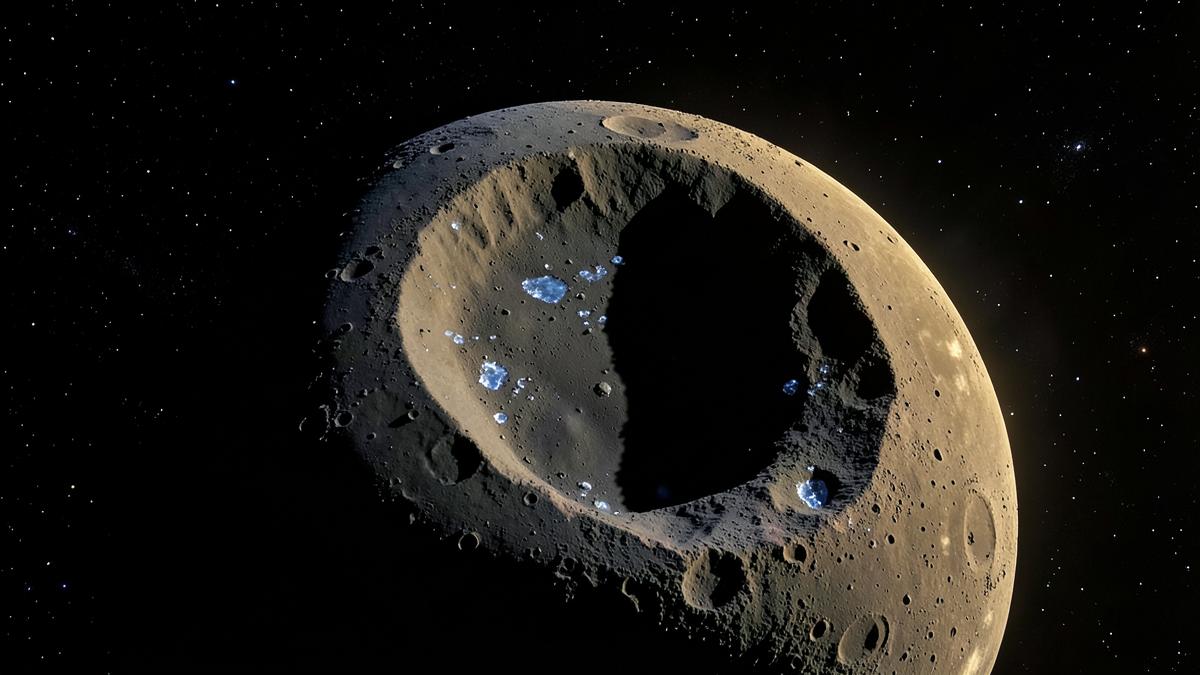
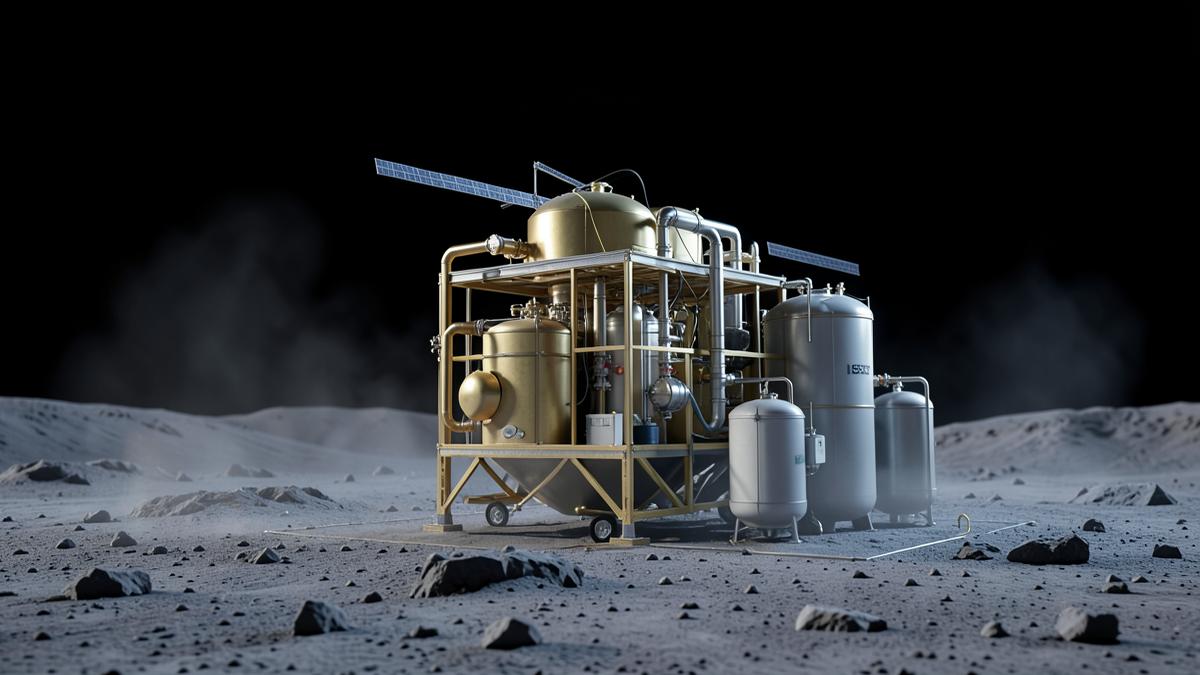
In situ resource utilisation means using materials found at a destination instead of bringing them from Earth. On the Moon, the most valuable known resource is water ice, particularly in the permanently shadowed regions of the south pole. The chemistry is simple. Split water into hydrogen and oxygen through electrolysis and you have propellant. Keep the water intact and you have drinking water and radiation shielding. Use the oxygen directly and you have breathing air.
The energy and cost case
The energy cost is what makes or breaks the economics. Electrolysis is energy intensive. A 2025 PNAS paper by Leger et al. at ESA modelled the energy requirements for oxygen production on the Moon. The exact figure depends on reactor temperature, efficiency and whether the feedstock is water ice or hydrated minerals, but the order of magnitude is clear: producing propellant on the surface requires a serious power plant and a heat rejection system that can operate in lunar vacuum.
The cost argument is equally direct. Every kilogram of propellant, water or oxygen delivered to the lunar surface must first be launched from Earth, transferred to lunar orbit and landed. Published NASA cost breakeven analyses argue that lunar ISRU becomes competitive once demand reaches the hundreds of tonnes required for sustained Moon and Mars missions. The crossover point depends on launch prices, flight rate, plant mass and operational life, but the directional case is strong: if you plan to operate on the Moon for years, making consumables there is cheaper than shipping them.
PRIME-1, VIPER and lunar resource missions
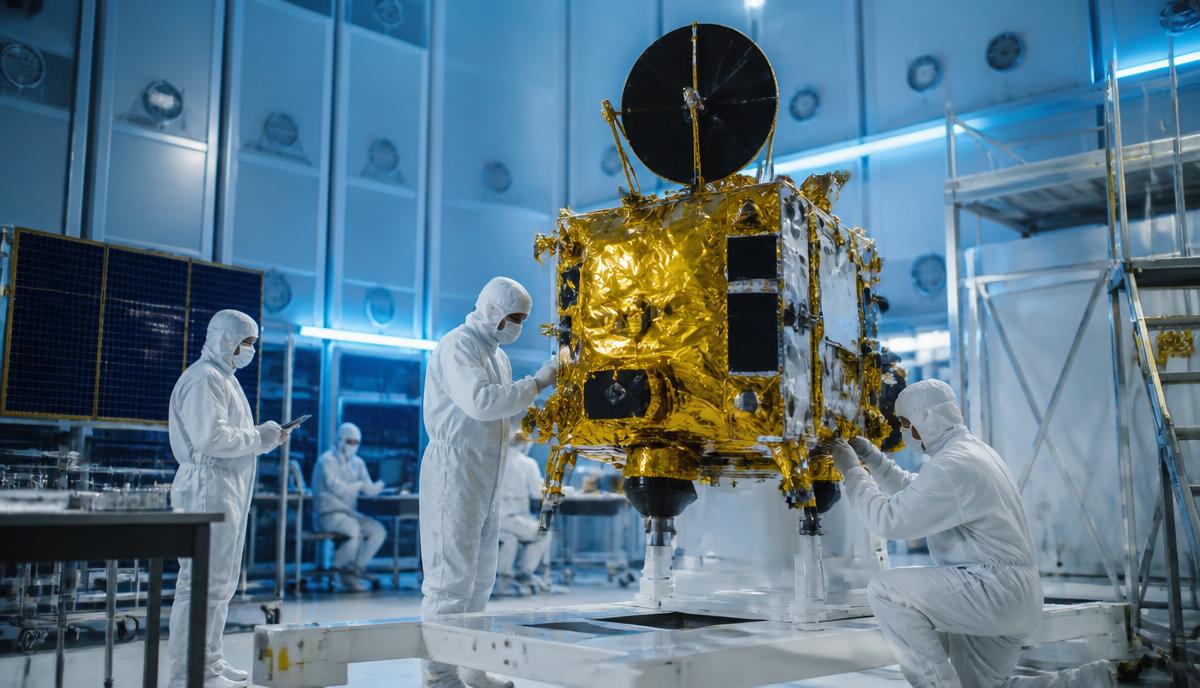
The technology is maturing. NASA's PRIME-1 payload, which flew on Intuitive Machines' IM-2 Athena lander in March 2025, combined the TRIDENT drill with MSolo, a mass spectrometer designed to observe lunar operations. Athena landed on its side inside a crater and the mission ended within days, but NASA reported on 29 April 2025 that TRIDENT completed tests despite the tipped-over state. A payload-operations summary published in the Planetary Science Journal on 1 July 2026 described direct volatile detection results from MSolo.
VIPER, NASA's Volatiles Investigating Polar Exploration Rover, has had a harder path. NASA announced intent to discontinue the project on 17 July 2024. After exploring a commercial partnership, NASA cancelled that solicitation on 7 May 2025. On 24 September 2025, reports emerged that VIPER had been revived and would fly to the lunar south pole on a Blue Origin Blue Moon Mark 1 lander. If it proceeds, VIPER would provide ground-truth data on ice distribution that no orbital instrument can match.
MOXIE and regolith-based alternatives
The best precedent for producing resources on another world is MOXIE. The Mars Oxygen In-Situ Resource Utilization Experiment rode on NASA's Perseverance rover, which landed in February 2021. MOXIE produced oxygen from carbon dioxide in the Martian atmosphere 16 times before completing its mission on 6 September 2023. It generated roughly 122 grams of oxygen in total. That is small, but it is the first demonstration of ISRU on another planet.
Other approaches do not require water ice at all. Blue Origin's Blue Alchemist programme uses molten regolith electrolysis to make solar cells, transmission wire and oxygen from lunar regolith simulant. On 25 July 2023, NASA awarded Blue Origin a 35 million dollar Tipping Point partnership to advance the technology. Sierra Space unveiled a carbothermal reduction reactor on 17 September 2024 designed to extract oxygen from lunar soil.
What remains unproven
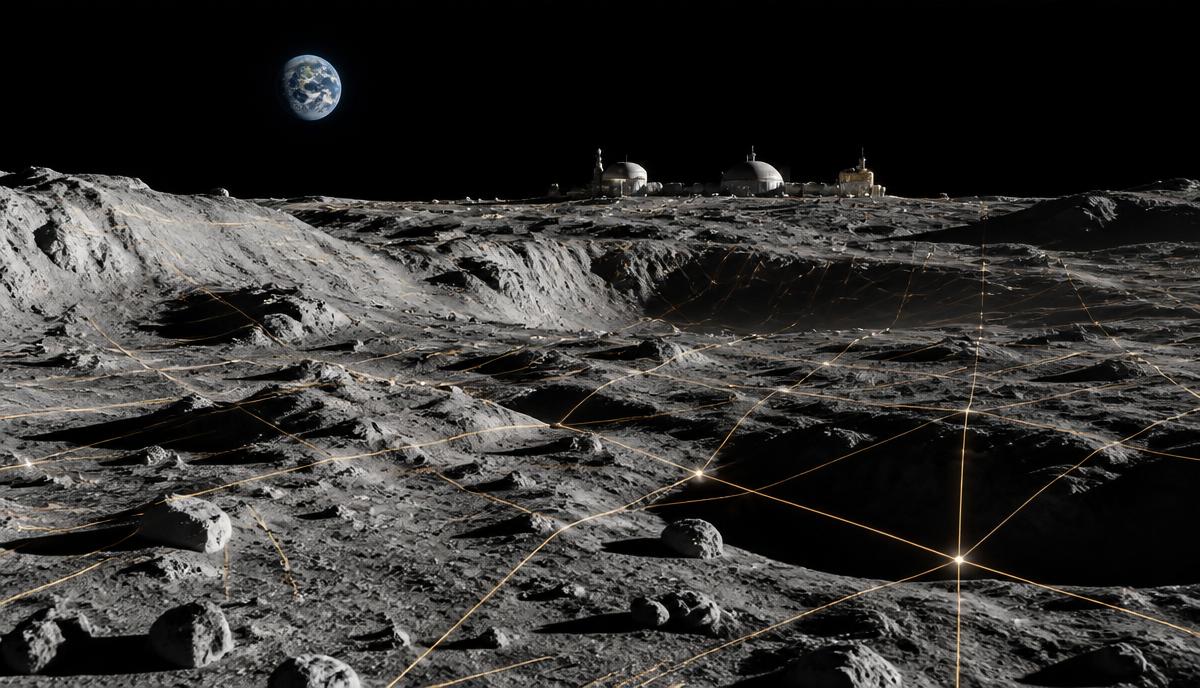
What remains unproven is the feedstock itself. Orbital data confirms hydrogen in PSRs. It does not confirm how much of that hydrogen is water ice, how it is distributed with depth, or what form it takes. Drilling in cryogenic regolith is untested at scale. Dust, power availability and thermal control add further operational risk. A propellant plant cannot be designed until a prospecting map exists.
SpaceOro's work on lunar transport assumes this sequence: first map, then mine, then produce, then ship. The previous article described the European lunar push. The next explains why small satellites are now the platform of choice for lunar reconnaissance.