Small Satellites, Big Distances: How CubeSats Became Deep Space Hardware
From university experiments to interplanetary missions: how CubeSats reached the Moon and Mars, and what limits them now.
From classroom standard to deep-space hardware
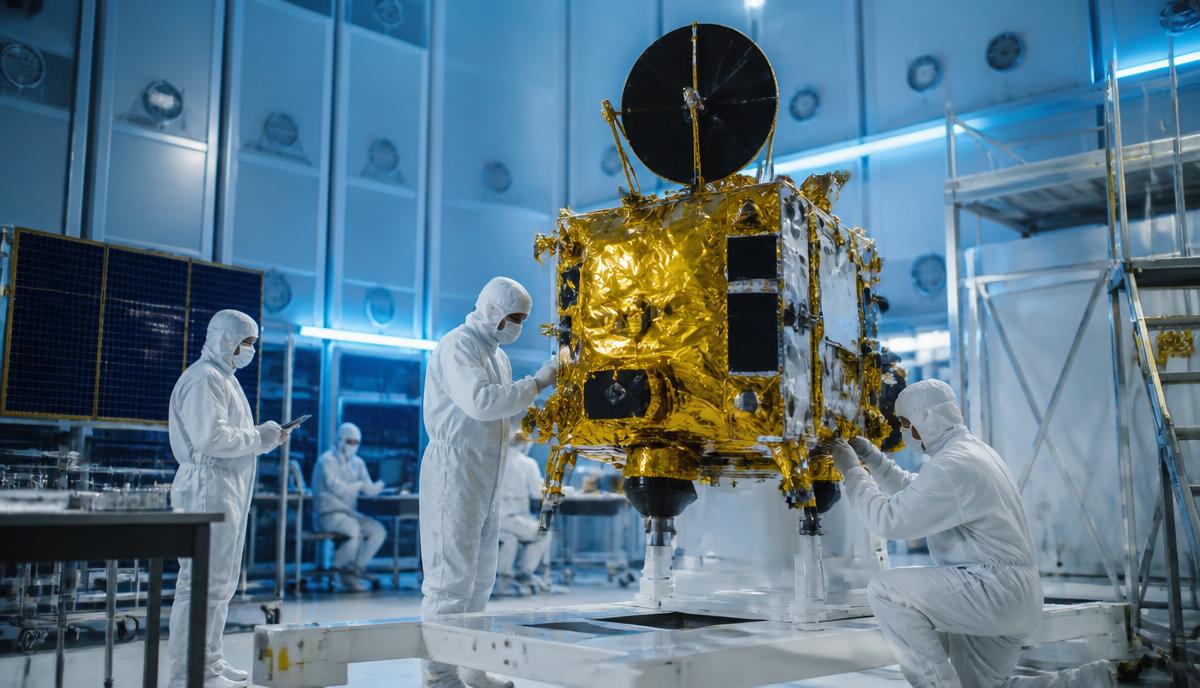
The CubeSat standard began as an educational tool. Cal Poly San Luis Obispo and Stanford University developed the 10-centimetre cubic format to let students finish a satellite in the time it took to earn a degree. The first designs flew in the early 2000s. Two decades later, the same form factor was relaying telemetry from Mars.
MarCO proves the deep-space concept
MarCO-A and MarCO-B, nicknamed WALL-E and EVE, were twin 6U CubeSats built by NASA JPL. They launched on 5 May 2018 alongside the InSight Mars lander. Their job was to receive InSight's entry, descent and landing telemetry in real time and relay it back to Earth at X-band. They worked. For the first time, CubeSats had operated beyond Earth orbit.
Artemis I: ambitious missions and hard lessons
The next major test was Artemis I. Ten CubeSats rode on the Space Launch System when it launched in November 2022. The cohort included lunar missions, an asteroid scout, a biology experiment and a space-weather monitor. Within weeks, it became clear that not all would succeed. Four of the ten were lost to communication failures, propulsion problems or deployment issues. NEA Scout, the solar-sail asteroid mission, never checked in. LunaH-Map, Lunar IceCube and OMOTENASHI also failed. The others, including ArgoMoon built by Italy's Argotec, returned useful data.
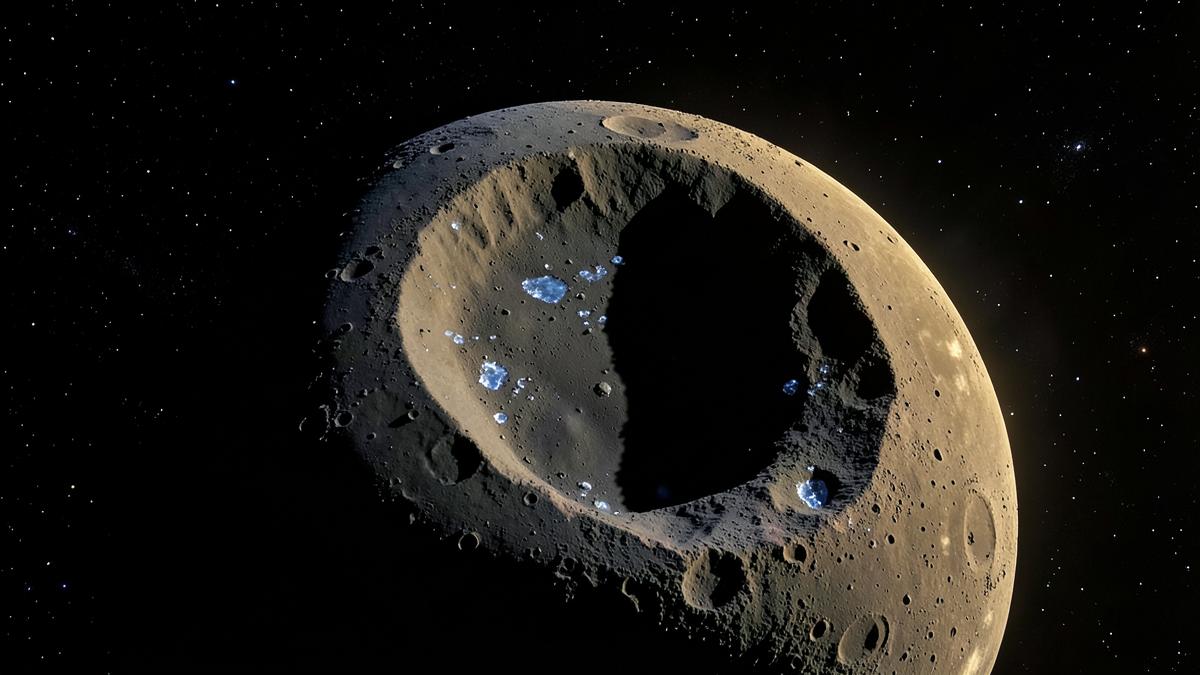
Lunar Flashlight, launched on 11 December 2022, was one of the most capable lunar CubeSats attempted. It carried four thrusters and a laser reflectometer to search for water ice in PSRs. The thrusters underperformed, preventing lunar orbit insertion. NASA ended the mission on 12 May 2023. Even in failure, the mission demonstrated laser reflectometry and advanced small-spacecraft propulsion.
CAPSTONE and the Gateway pathfinder
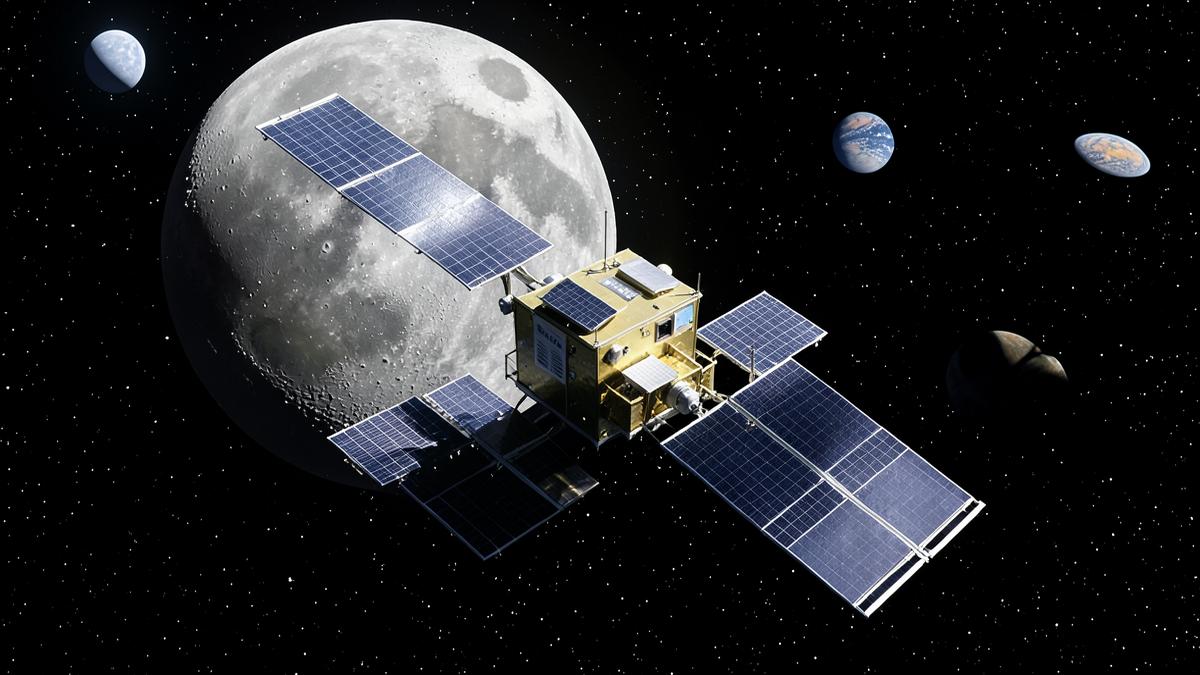
CAPSTONE is the success story. The 12U spacecraft, built and operated by Advanced Space and Terran Orbital, launched on 28 June 2022 and arrived in its near-rectilinear halo orbit on 13 November 2022. It experienced a stuck thruster during operations, which engineers worked around. By August 2023 it had operated for almost 300 days, serving as the pathfinder for NASA's Gateway station. A 2024 SmallSat conference paper was titled "Operating in a Unique Three Body Orbit With a Stuck Thruster." That title captures the state of the art.
Several technologies made this leap possible. The Iris deep-space transponder, developed at JPL, gave small spacecraft a radio link that works at planetary distances. Deployable high-gain antennas increased data rates. Electrospray and green propulsion systems provided more delta-v than cold gas. Radiation-tolerant avionics kept processors alive outside the magnetosphere.
NASA's State-of-the-Art Small Spacecraft Technology report, published in May 2026, documents the shift. The report assesses systems publicly available as of April 2026 and notes the broader move from experimental, low-cost platforms toward highly capable spacecraft. The 2026 edition updates chapters on complete platforms, power, propulsion, guidance and control, structures, thermal control, avionics and communications.
The constraints have not disappeared. Power budgets are tight. Thermal control is harder when the Sun is not always available. Delta-v is limited by tank volume and thruster lifetime. Communications link budgets demand either large ground antennas or relay constellations. Reliability remains the hardest problem; a single component failure can end a deep-space CubeSat mission because there is rarely redundancy.
Why small satellites fit lunar reconnaissance
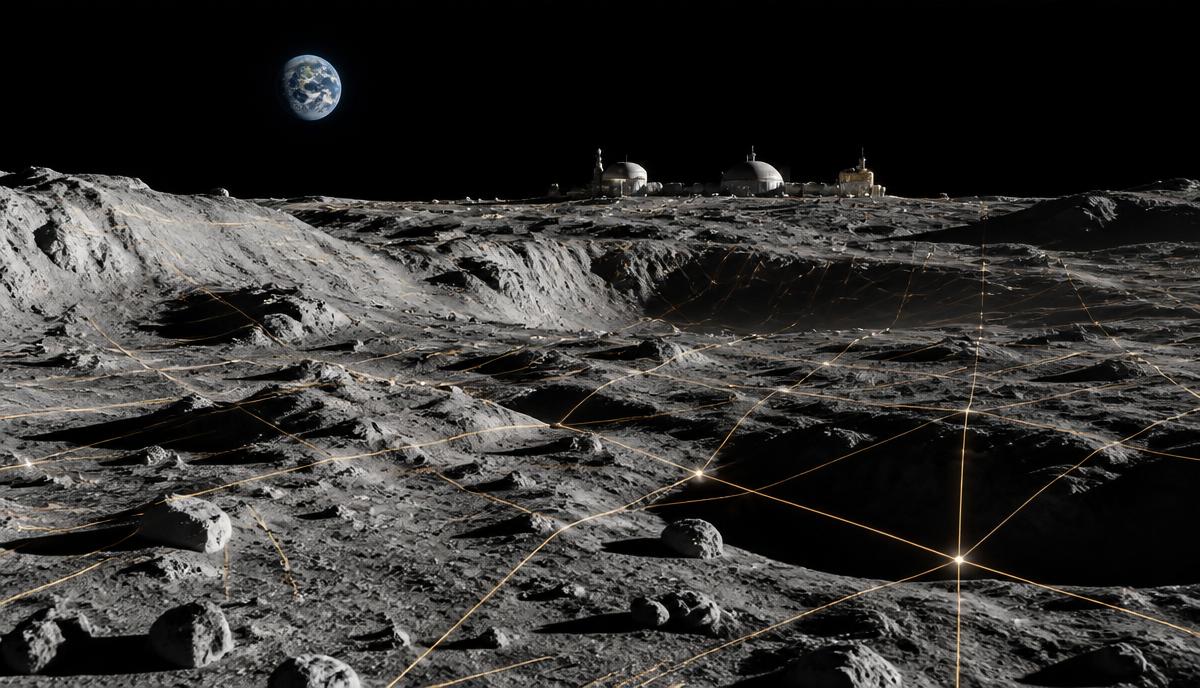
For lunar reconnaissance, the trade-off is attractive. A small orbiter can reach the Moon as a rideshare, carry a focused instrument suite, and operate for years at a fraction of the cost of a flagship mission. That is why SpaceOro's RedLunar concept is a small satellite. The RedTransporter page describes the transport layer, but transport needs targets, and targets need maps. The previous article explained how ISRU turns lunar ice into fuel, air and water. Together, these pieces describe the sequence SpaceOro is working toward: map the poles, select the sites, and build the infrastructure that makes return trips routine.